What Does Hail Damage Do to a Roof
In 2022, there were over 4,400 severe hail reports, resulting in billions of dollars in property damage. State Farm reported a $1 billion increase in hail claim costs due to the increased number of hail storms in 2022.
Central Iowa sits in one of the most hail-active corridors in the country. Des Moines metro homeowners — from Ankeny and Urbandale to Waukee and West Des Moines — deal with hail events from April through August nearly every year. At Superstorm Roofing & Siding, we’ve inspected more than 14,500 properties across Central Iowa after storms just like the ones you’re reading about. This guide breaks down what hail does to a roof, how to spot hail damage by size, and what to do next.
The costs associated with hail damage can quickly add up because hail affects just about anything outside, including your car, your windows and your roof. Some signs of hail damage are obvious, like a broken window or a dented car. But it’s the small, unnoticeable damage from hail that takes a trained eye to spot. Even if you don’t have obvious holes in your roof due to hail damage, you likely still need a hail damage roof inspection to find out how much damage you’re dealing with and how to proceed with any roof repairs needed.
Think your Central Iowa home may have hail damage?
What Hail Does to a Roof
Iowa’s hail season runs from late April through August, with the heaviest storms typically hitting Central Iowa in May, June, and July. The Des Moines metro’s flat terrain and position in the warm-air corridor from the Gulf of Mexico make it especially vulnerable to large hail events — including the types of damaging storms we’ve seen repeatedly across the metro in the 2020s. Communities like Johnston, Grimes, Clive, and Altoona see damaging hail nearly every season.
The effects of hail roof damage can differ according to a range of factors: hail size, wind speed, wind direction, the material of the roof, age of materials and slope all have an effect on the possible roof damage that occurs during a hail storm. Hail damage is bad for a roof when it leads to roof leaks and other issues. Damage can be functional or cosmetic, and it’s the cosmetic damage that is sometimes more severe than it looks. Things like broken edges, bruises, punctures and granule loss can cause serious complications, though they may seem cosmetic at first.
Hail Size Chart: Damage by Diameter
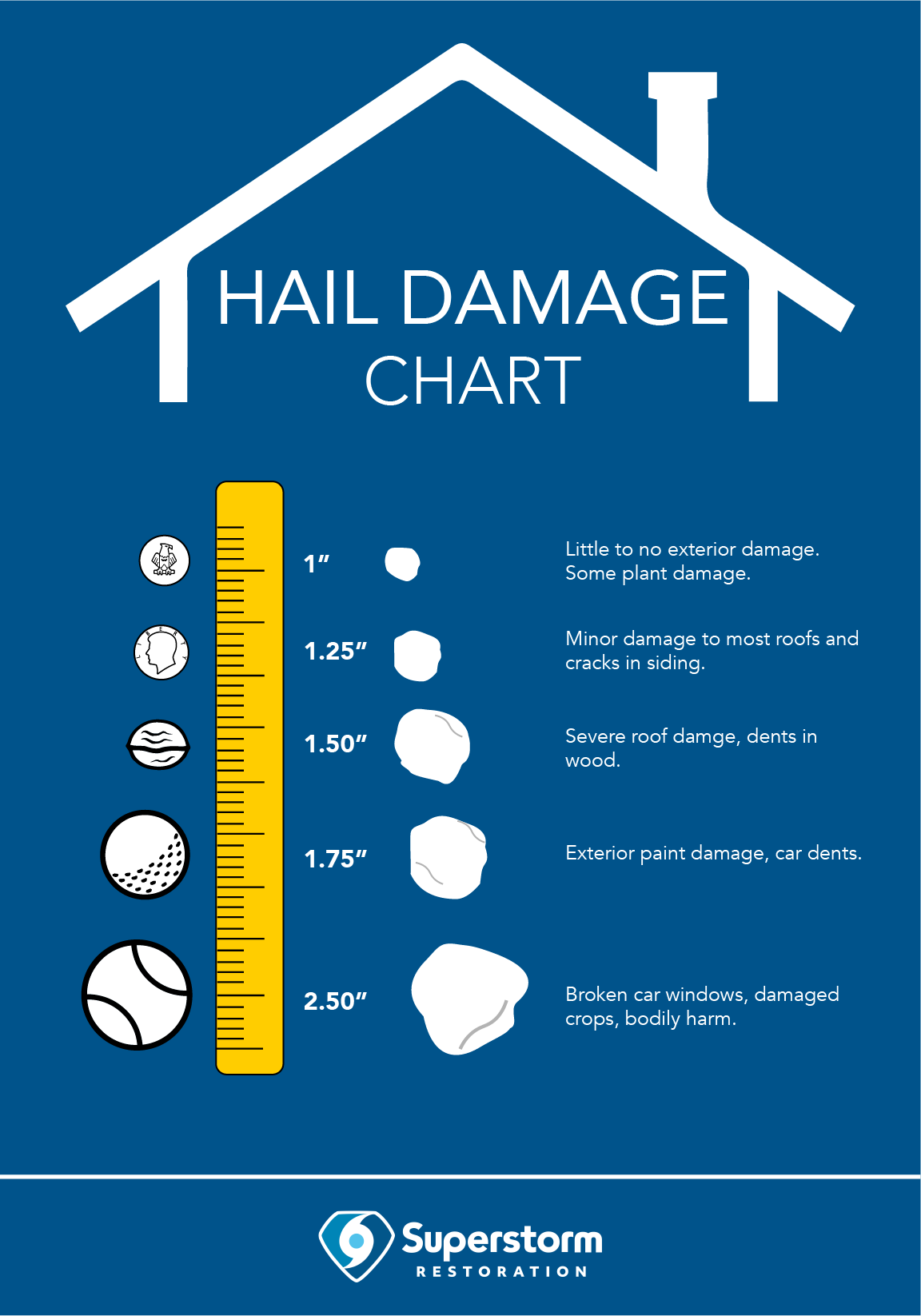
In Central Iowa, hailstones between 1″ and 1.5″ are the most commonly reported during severe thunderstorms. Major storm events have dropped 2″+ hail across the Des Moines metro — large enough to cause significant damage to any roof material.
Hail Damage to Asphalt and Composition Shingles
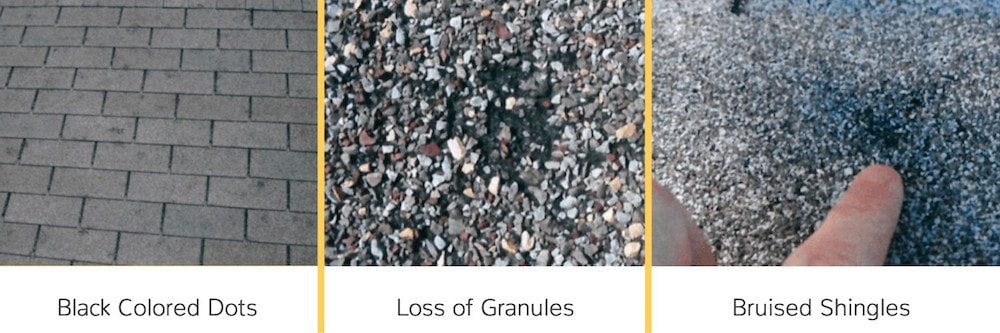
Granule Loss
Granules are the sandpaper-like part of the shingle. When a shingle loses granules, its asphalt coating is exposed to the elements, which leads to accelerated aging — one reason many Iowa homeowners are switching to impact-resistant shingles rated to withstand hail. Take a look in your gutters and downspouts after a hailstorm to see if any granules have come off your shingles.
Cracks in the Shingles
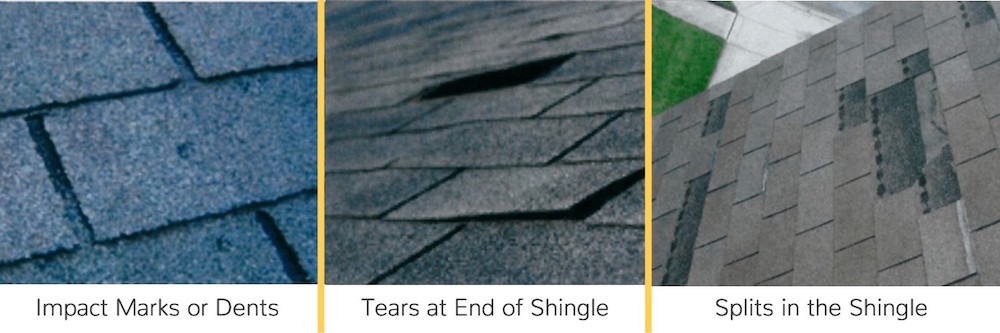
Hard hail impacts or high winds can grip the shingles and cause cracks. This can lead to exposure and tears, leaving your roof with bare spots. Cracked shingles cannot effectively protect your roof from the weather.
Exposed Fiberglass Mat
Hail impact on a roof can shatter the shingles’ surfacing, causing it to break away from the fiberglass mat underneath.
Fractured Fiberglass Mat
Fractured fiberglass can be slightly harder to detect and usually requires a trained eye. Fractured fiberglass mats can result in tears and cracks from a point of hail impact.
Weakened Self-Seal Strip
High winds and hail can weaken the seal integrity of your shingles. A weakened seal is what causes a shingle to blow off and can leave your roof exposed to the elements. Once a shingle is damaged, its integrity has been permanently compromised. This can lead to leaks, and it can cause other shingles around it to tear.
Once you know about these common forms of hail roof damage, you can start to look for signs of damage on your property after a hailstorm.
How Do You Know If Your Roof or Exterior Has Hail Damage?
Determining whether your roof or exterior has hail damage can be challenging, especially if the damage is minor and not easily visible to an untrained eye. However, there are several key indicators to look for — or follow our post-storm checklist for Iowa homeowners. Firstly, inspect your gutters and downspouts, as high-impact hail is likely to dent them. Dents and dings on these areas often suggest roof damage. Additionally, check if your gutters are clogged or overflowing, as granules shed from shingles during a hailstorm can cause blockages. Another area to examine is your siding, which can show signs of hail damage. Lastly, your deck may also exhibit damage from a severe hailstorm, serving as an indicator for potential shingle damage. If any of these areas display hail damage, it is advisable to seek a professional roof inspection for a comprehensive assessment.
Can 1 Inch Hail Cause Damage to a Roof?
Yes! In fact, even hail smaller than 1 inch can cause damage to a roof or to other areas of your house. After a hailstorm, the size of the hail can be the easiest indicator as to what types of damage you may face. While not a foolproof method for predicting storm damage, understanding the various sizes of hail and how they affect your home is a great place to start.
¾” Hail
Though the smallest hail we measure, ¾” hail can still be damaging depending on accompanying wind speeds. Hail this size typically damages vinyl siding, window screens, metal fascia and paint on a deck. We also see it dislodge granules from asphalt shingles and damage gutters and downspouts. Because of its smaller size, property owners often fail to identify the damages associated with hail under one inch. In Iowa, we frequently see ¾” hail during early-season storms from April through May.
1″ Hail
Once we hit the 1″ mark, we start to see bruising to shingle underlayment and significant damage to siding, gutters and fascia. Wind speeds will determine the severity of damage, and you will also see roof damage similar to damage caused by smaller sizes of hail.
1¼” Hail
With only a ¼” increase, the severity of this size of hail is much more significant. Parts of your property exposed to hail have the potential to look like Swiss cheese. Even without wind, we’ll see this hail cause damage by simply falling out of the sky.
1½” Hail
This size of hail causes significant damage to property. Depending on the amount of hail, the length of time it falls and the accompanying wind speeds, damage to your property could be severe.
1¾” – 2″ Hail
Now we’re getting to the size where the hail can penetrate softer parts of a roof, such as ridge caps, plastic roof vents and soffit and fascia. Combined with wind, this size of hail can tear siding completely off of a house, crack windows and damage most types of metal fixtures.
2″ Hail and Larger
Anything this size or above will cause significant and severe damage to your property. We are no longer asking “if” you have property damage, but “where” you have property damage. Contact a roofing contractor with insurance documentation experience immediately after this type of storm event.
Don’t wait — hail damage gets worse with every storm.
What Does Roof Damage From Hail Look Like?
If a storm brings hail that is over one inch in diameter, the hail damage to your roof will probably be obvious. When hail is combined with high wind speeds, roof damage can be even more severe. It’s likely that you will be able to see signs of damage such as cracked or broken windows, damaged siding or dented gutters. Smaller hail can cause unseen damage to your roof, so make sure you contact a hail damage repair team to inspect your roof after a hailstorm — no matter how small the hail was.
While these are the common types of damage we see on asphalt shingles, hail can crack or even shatter harder materials like clay or concrete. This type of damage will be easy to see, but when you consider something like hail impact marks, you really start to see how a roofing expert can help spot small, important details.
Can Hail Damage to a Roof Be Repaired?
Yes! Depending on the extent of the damage, repairing a roof damaged by hail can be as simple as fixing a single shingle or as involved as replacing the whole roof. This vast difference in repair options is why we suggest everyone have their roof inspected by a professional after a big hailstorm. An experienced roofer can quickly determine the severity of the damage.
Most roof inspections are also free, giving you a no-cost solution if you think your roof has been damaged during a recent or past storm. If you’re unsure on whether you need a hail damage roof inspection, look for signs of damage like the ones noted above. If you are finding more than one instance of a dented gutter or damage to your siding, you should seriously consider a hail damage roof inspection. As we mentioned before, shingle damage can be severe or relatively mild. While it’s easy to tell when severe damage has occurred, it’s more important to understand the mild damage and decide what kind of hail damage roof repairs may be needed.
As an Owens Corning Platinum Preferred contractor — one of only eight in Iowa and in the top 1% nationally — Superstorm Roofing & Siding offers free hail damage roof inspections across the Des Moines metro and Central Iowa — including Norwalk, Pleasant Hill, Polk City, Bondurant, and Indianola. Our team has inspected over 14,500 properties and can determine whether you need a simple repair or a full roof replacement.
Iowa’s top 1% roofing contractor. 14,500+ properties inspected.
What Happens When You Ignore Roof Repairs?
When ignored, shingle and roof damage can quickly turn into leaks or ice dams. These eventually turn into mold damage, electrical issues, or rotting wood — all of which are expensive to fix.
Wood rot and mold, for example, can spiral out of control and are hard to detect until it’s almost too late. Being proactive about potential issues like these can save you thousands of dollars and keep your home in great condition.
Handling Hail Roof Damage
After you have decided what to do and if your home was damaged, it’s important to find a roofing contractor that you trust and, preferably, one that has experience working on projects for which homeowners have filed insurance claims. If you’re considering an upgrade after hail damage, learn the difference between Class 3 and Class 4 impact-resistant shingles — they can withstand larger hail and may reduce your insurance premiums by up to 20%.
Is a Hail Damaged Roof Covered by Insurance?
A typical homeowners insurance policy will include coverage for roof damage from hail — learn more about how Superstorm helps with insurance documentation — but coverage may be applied differently depending on where you live, who your insurer is and the details of your policy.
In Iowa, most standard homeowner policies cover hail damage to your roof, though coverage terms — including whether your policy pays actual cash value (ACV) or replacement cost value (RCV) — vary by insurer. Many policies require claims to be filed within a set time after the damage, often one year, so having your roof inspected promptly after a storm helps ensure you have documentation within your filing window. Whether you’re in Indianola, Pella, Boone, or Winterset, we provide the detailed documentation and evaluation data homeowners need when working directly with their insurance company, though we are not public adjusters.
How Long Do I Have to File an Insurance Claim for Hail Damage?
Many homeowner policies require you to file a claim within a set time after the damage — often one year. Check your policy for your exact deadline. We recommend that you make an appointment to have your roof inspected as soon as possible after you suspect roof damage caused by hail. You want to have plenty of time to review damage assessments as well as any quotes for hail damage roof repairs.
If your home has been affected by hail damage, contact Superstorm Roofing & Siding for a free hail damage roof inspection. We serve homeowners across Des Moines, Ankeny, Urbandale, Waukee, West Des Moines, Ames, Fort Dodge, Johnston, Grimes, Norwalk, Bondurant, Altoona, and all of our Central Iowa service areas. As an Owens Corning Platinum Preferred contractor in the top 1% nationally, we provide the detailed documentation and evaluation data homeowners need when working directly with their insurance company, though we are not public adjusters.
Ready to protect your Central Iowa home?
Recent Posts
- Class 3 & Class 4 Shingles: The Real Value — and the Fine Print on Insurance Rebates
- What to Do After a Wind or Hail Storm in Iowa (Homeowner Checklist)
- How Much Does a New Roof Cost in Iowa (2026)?
- How Long Does a Roof Last in Iowa? Warning Signs You Need a New Roof
- Understanding Gutter Types and Sizes
- Giving Back To Our Community
- Prepare Your Home And Business For Severe Wind Storms Like A Derecho
- Comprehensive Guide to Roof Financing for Property Owners
- Understanding Your Insurance Claim After a Storm
- Protect Your Roof To Protect Your Home – Roof Maintenance Checklist for Every Season