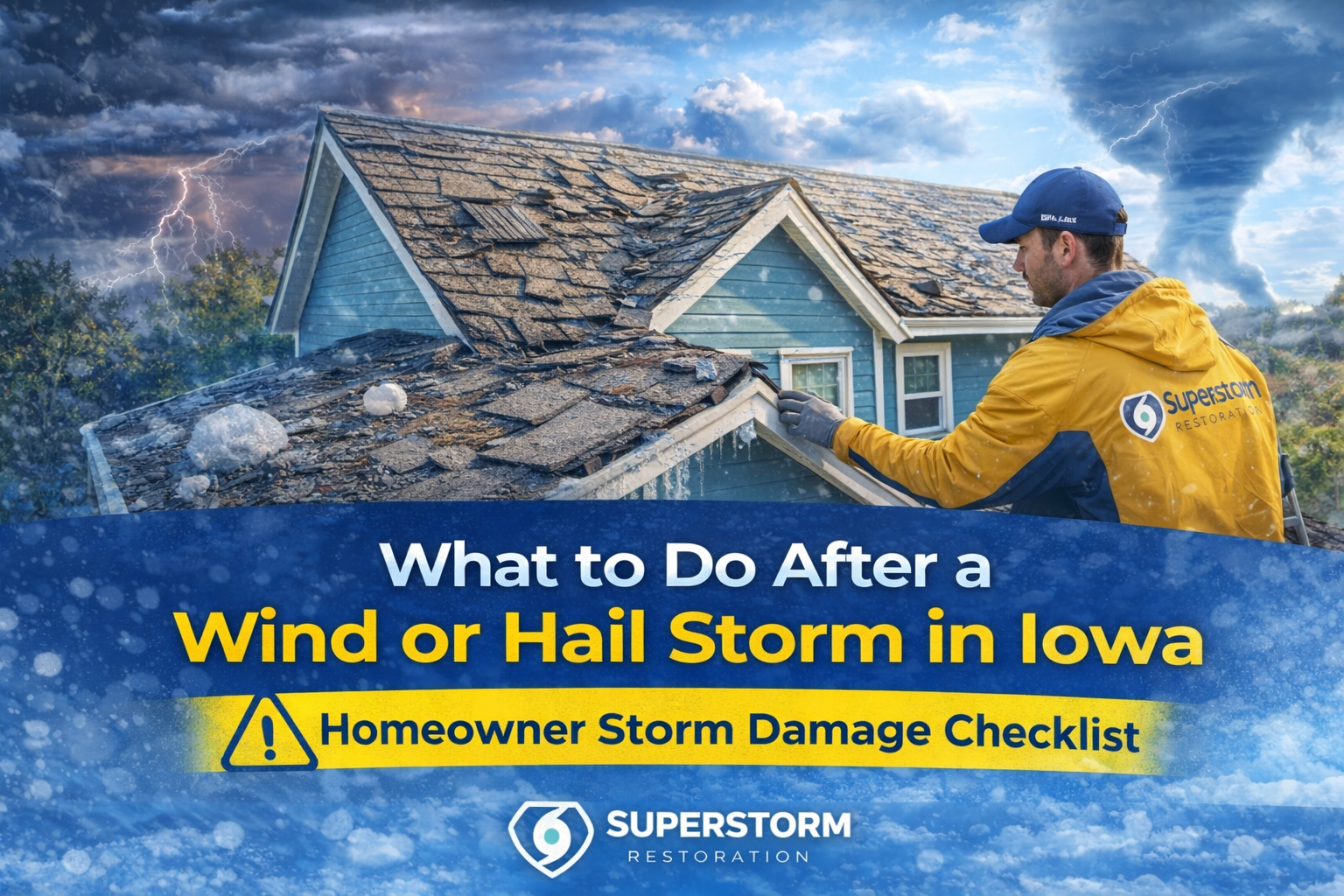
What to Do After a Wind or Hail Storm in Iowa (Homeowner Checklist)
If you live in Iowa, you already know how quickly the weather can turn. Strong winds, hail, heavy rain, and even late snowstorms can hit without much warning — and your roof is often the first line of defense.
After a major storm rolls through, many homeowners are left wondering:
Did my roof take damage? Do I need an inspection? Should I call my insurance?
If you’re asking those questions, you’re not alone — and acting quickly can save you thousands in repairs.
This guide walks you through exactly what to do after a storm, how to spot damage, and when to schedule a storm damage roof inspection in Iowa.
Why Storm Damage in Iowa Is a Bigger Deal Than You Think
Iowa homes face a unique combination of weather risks:
- High winds that lift or tear shingles
- Hail that bruises or cracks roofing materials
- Freeze-thaw cycles that worsen small damage
- Heavy rain that exposes hidden leaks
Even if your roof looks fine from the ground, damage can go unnoticed — and worsen over time.
That’s why a professional roof inspection after a storm is one of the smartest steps you can take.
Signs of Wind Damage on Your Roof
After strong winds, your roof may have visible or hidden issues. Here’s what to look for:
🚩 Missing Shingles
If you notice shingles in your yard or see bare spots on your roof, that’s a clear sign of damage.
🚩 Lifted or Curling Shingles
Wind can loosen shingles without fully removing them. This creates entry points for water.
🚩 Debris on the Roof
Branches or debris can cause impact damage or trap moisture.
🚩 Loose Flashing
Flashing around chimneys, vents, and valleys can become detached during storms.
🚩 Granules in Gutters
If your gutters are filling with shingle granules, your roof may be deteriorating faster than expected.
Signs of Hail Damage (Even If You Don’t See Leaks Yet)
Hail damage isn’t always obvious — but it can shorten your roof’s lifespan dramatically.
🔍 What to check:
- Dark spots or dents on shingles
- Soft or bruised areas
- Dented gutters, downspouts, or vents
- Damage to siding or window trim
Even small hail can weaken your roof enough to cause future leaks.
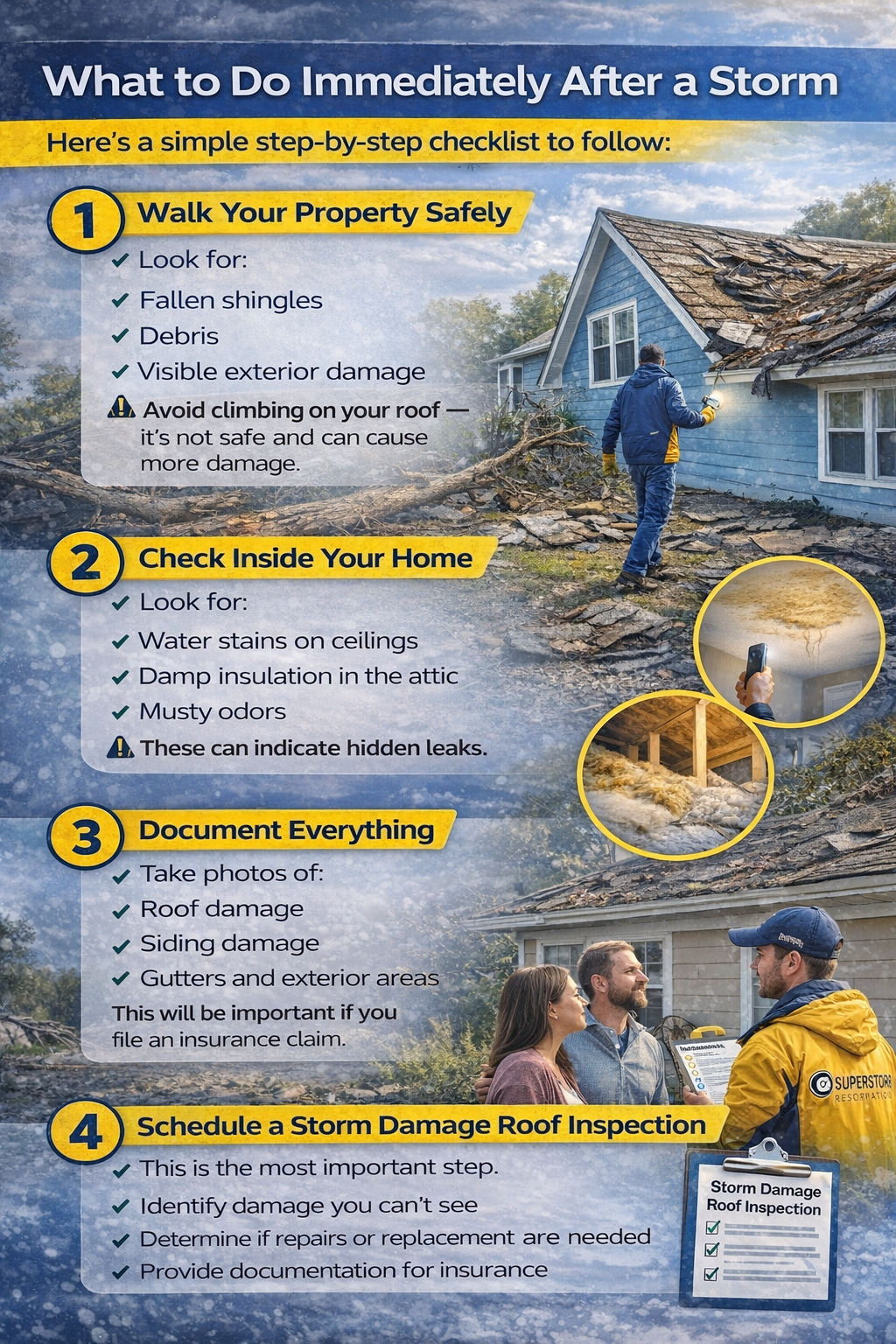
What to Do Immediately After a Storm
Here’s a simple step-by-step checklist to follow:
1. Walk Your Property Safely
Look for:
- Fallen shingles
- Debris
- Visible exterior damage
⚠️ Avoid climbing on your roof — it’s not safe and can cause more damage.
2. Check Inside Your Home
Look for:
- Water stains on ceilings
- Damp insulation in the attic
- Musty odors
These can indicate hidden leaks.
3. Document Everything
Take photos of:
- Roof damage
- Siding damage
- Gutters and exterior areas
This will be important if you file an insurance claim.
4. Schedule a Storm Damage Roof Inspection
This is the most important step.
A professional inspection will:
- Identify damage you can’t see
- Determine if repairs or replacement are needed
- Provide documentation for insurance

When Should You Call a Roofing Contractor?
You should call a contractor immediately if:
- You suspect hail or wind damage
- You see missing or lifted shingles
- Your neighbors are getting inspections
- Your area was hit by severe weather
In Iowa, storm damage often affects entire neighborhoods — not just individual homes.
Even if your roof looks fine, it’s smart to schedule a storm damage roof inspection in Iowa to be sure.
Insurance Claims: What Iowa Homeowners Need to Know
Many homeowners hesitate to file a claim because they’re unsure how the process works.
Here’s what you should know:
✔ Storm damage is often covered
Most policies cover:
- Wind damage
- Hail damage
- Storm-related roof issues
✔ Timing matters
Waiting too long can:
- Worsen damage
- Make claims harder to approve
✔ Documentation is key
Your contractor can help provide:
- Inspection reports
- Photos
- Damage assessments
✔ You don’t have to do it alone
A reputable roofing company can:
- Meet with your adjuster
- Help explain the damage
- Ensure nothing is missed
Why a Professional Roof Inspection Matters
A trained eye can spot issues homeowners often miss.
Without an inspection, you risk:
- Hidden leaks
- Structural damage
- Expensive future repairs
A proper inspection gives you:
- Peace of mind
- Clear next steps
- Accurate insurance documentation
How Iowa Weather Makes Small Damage Worse
One of the biggest risks in Iowa is delayed repairs.
Because of:
- Temperature swings
- Rain following storms
- Snow melt and refreeze
Even minor damage can quickly turn into major problems.
That’s why acting early is critical.
Storm Damage Doesn’t Always Mean Full Replacement
Not every storm leads to a new roof.
In many cases:
- Minor repairs are enough
- Sections can be replaced
- Preventative maintenance can extend lifespan
An inspection helps determine the right solution.
Schedule Your Free Storm Damage Roof Inspection
If your home was affected by recent storms, now is the time to act.
A professional inspection can:
- Catch damage early
- Help with insurance claims
- Prevent costly repairs later
👉 Schedule your free storm damage roof inspection in Iowa today
👉 Protect your home before the next storm hits | (515) 225-4880
Frequently Asked Questions (FAQ)
How do I know if my roof has storm damage?
Look for missing shingles, dents, debris, or leaks inside your home. A professional inspection is the most reliable way to confirm damage.
Should I get a roof inspection after every storm in Iowa?
If the storm included strong winds or hail, yes. Even minor storms can cause hidden damage.
Will my insurance cover storm damage to my roof?
Most homeowners insurance policies cover wind and hail damage, but documentation and timing are important.
How soon should I schedule a roof inspection after a storm?
As soon as possible. Waiting can make damage worse and complicate insurance claims.
Can I inspect my roof myself?
You can check from the ground, but climbing on your roof is dangerous and not recommended.
What happens during a storm damage roof inspection?
A contractor will check shingles, flashing, gutters, and structural areas, then provide a full damage report.


Recent Posts
- What to Do After a Wind or Hail Storm in Iowa (Homeowner Checklist)
- How Much Does a New Roof Cost in Iowa (2026)?
- How Long Does a Roof Last in Iowa? Warning Signs You Need a New Roof
- Understanding Gutter Types and Sizes
- Giving Back To Our Community
- Prepare Your Home And Business For Severe Wind Storms Like A Derecho
- Comprehensive Guide to Roof Financing for Property Owners
- Understanding Your Insurance Claim After a Storm
- Protect Your Roof To Protect Your Home – Roof Maintenance Checklist for Every Season
- Deciphering Good vs. Bad Roofing Jobs
