How to Tell if High Winds Damaged Your Roof
It’s not something you’re likely to think about, nor see as you pull up to your house — it’s roof damage. After a week of storms, we’re usually happy to see the clouds part and the sun shine through. But remember that those storms could have caused significant damage to your roof from either hail or high winds. The roof may have bang-ups, loose shingles and spots of missing asphalt. If the roof is old or you suspect it’s got some issues — give us a call. We’re the experts and we’ll be looking for all the possible signs of damage that may need to be documented for your records.
Wind Can Cause Serious Damage to Your Home
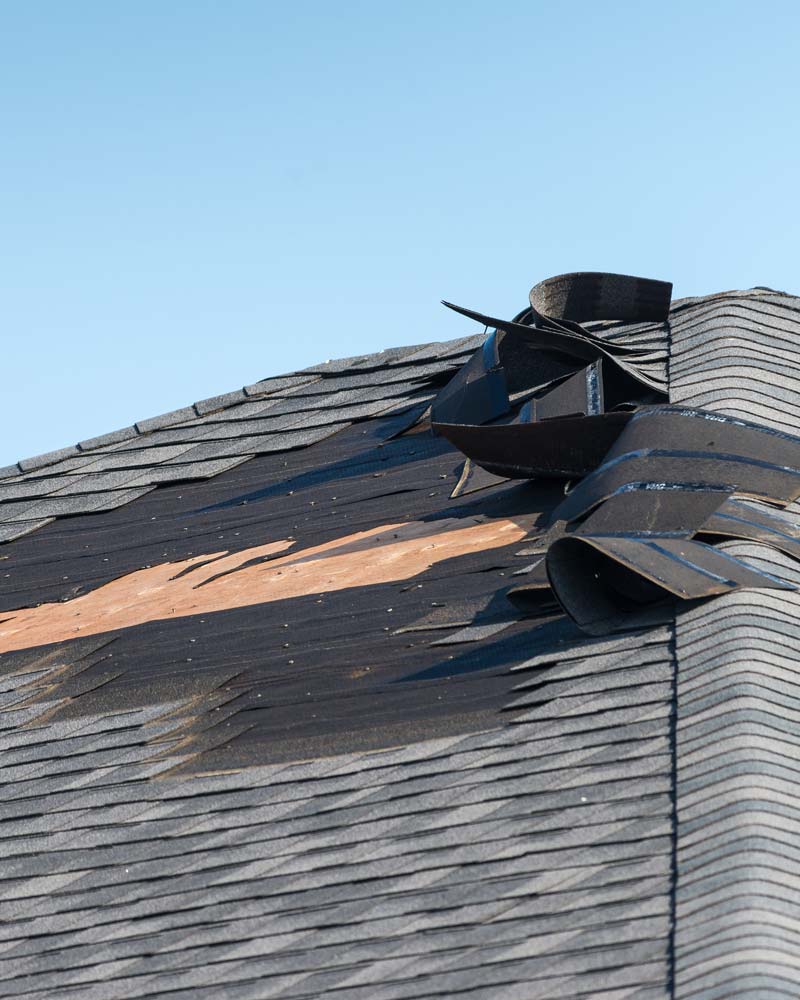
Homeowners are often surprised to hear that wind can cause damage to their homes. High winds create hazards to your property and surrounding areas — fallen branches, uprooted trees and torn-down power lines. While these dangers are what we picture after a big storm, the wind itself can also result in structural damage to your home. When high winds hit a roof, shingles can loosen or fall off. If wind speeds are very high, even new, secure shingles can tear away. Other wind damage includes damage caused by falling objects and debris such as tree branches.
Had a storm recently? Don’t guess — know.
Wind Damaged Roofs
Roofs are very susceptible to wind damage, in part because high winds do not hit roofs uniformly. Wind tends to cause the most damage at the edges and ridgelines, or areas of the roof that are already loose. These vulnerable spots are easy targets because winds can more easily rip up loose shingles, causing a chain reaction across your roof. Eventually, after prolonged wind damage, your roof can start to leak or rot due to water exposure — which is why a prompt roof inspection from an experienced contractor matters.
What Is the Best Roof for High Winds?
If you want the best roof for high winds, the decking under the shingles needs to be strong and sturdy, and your fasteners should be high-quality. Craftsmanship is also critical — proper installation technique can be the difference between a roof that survives a storm and one that doesn’t. Impact-resistant shingles like the Owens Corning Duration FLEX (Class 4) are engineered to withstand severe weather and may qualify you for up to a 20% insurance discount. Some metal roofing options can withstand wind speeds of more than 150 mph.
Wind Speed Damage
So what wind speeds do you need to be worried about?
45–57 mph: According to the National Weather Service, slight damage can begin when winds reach 45 mph, but this range is considered “non-severe.” These winds may cause some tree branches to break off and can damage already loose or susceptible shingles.
58–74 mph: This is when winds turn severe and cause significant damage to landscaping and structures. At this range, wind will take down whole tree limbs, begin to uproot trees, rip off shingles that were in good condition and cause issues with chimneys.
75+ mph: At this speed, wind causes widespread damage to trees, can flip mobile homes and cause significant roof damage to commercial buildings and homes across Des Moines and Central Iowa.
Think Your Roof Took a Hit?
Don’t wait for the leak to tell you. We’ll have a crew on your roof with drones — free of charge.
14,500+ properties inspected across Central Iowa. We know what damage looks like.
Identifying Wind Damage to Your Roof
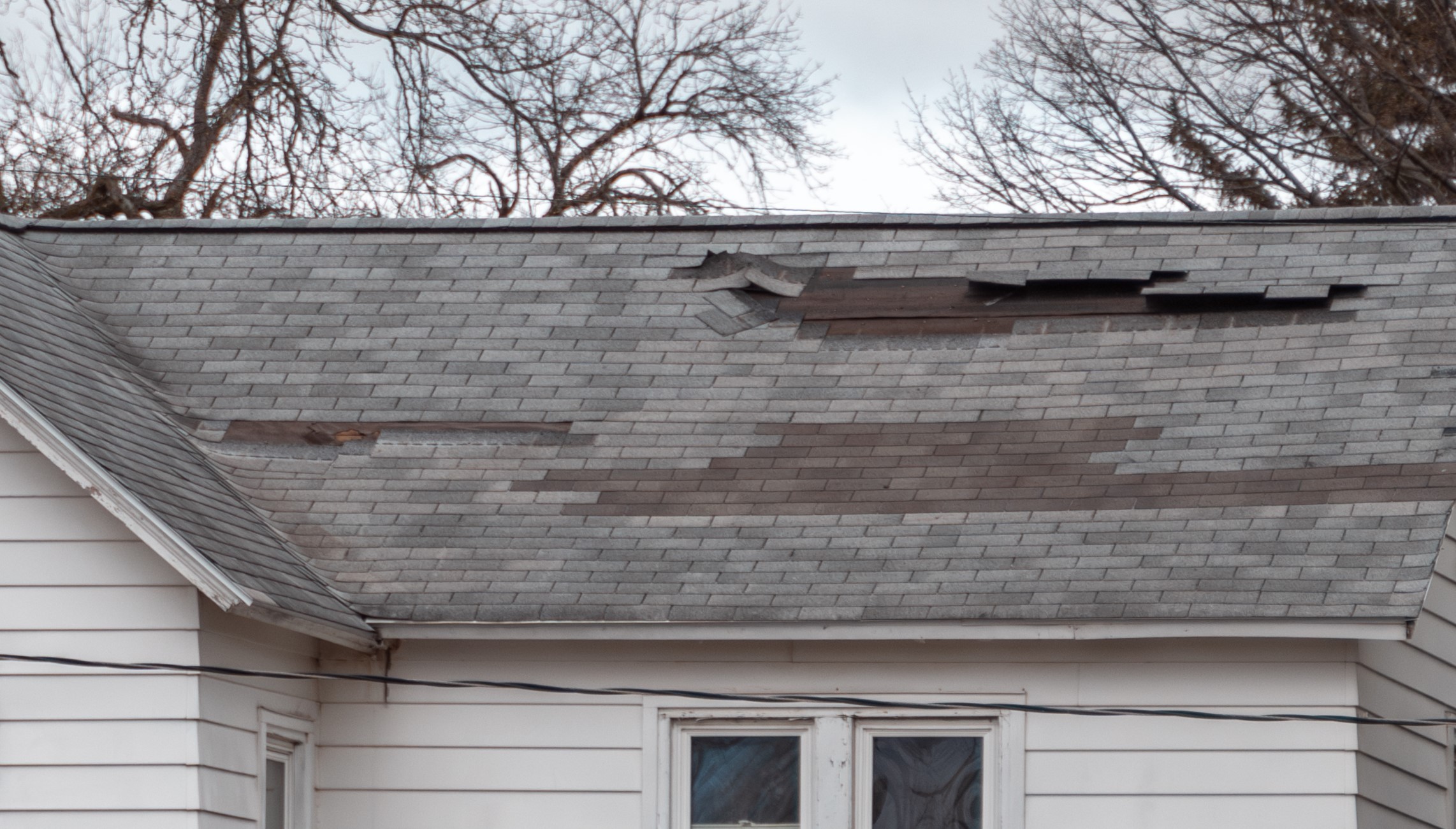
If you’ve recently experienced winds of 45 mph or higher, call us and we’ll get outside and take a look at your roof for some of the common signs of damage. Signs of wind damage on a roof include loose or missing shingles, chimney issues, curling or peeling shingles, granule loss, damaged soffit or fascia and indoor leaks. High winds can also cause tree branches to fall and damage a roof.
Spots of Granules Missing from Your Shingles
Like hail, wind can cause loss of granules (the sandpaper-like part of the shingle). The first place we look to determine if you have missing granules is by inspecting your gutters, as this is where they tend to pile up.
Edge of Roof Curling from Peeling Shingles
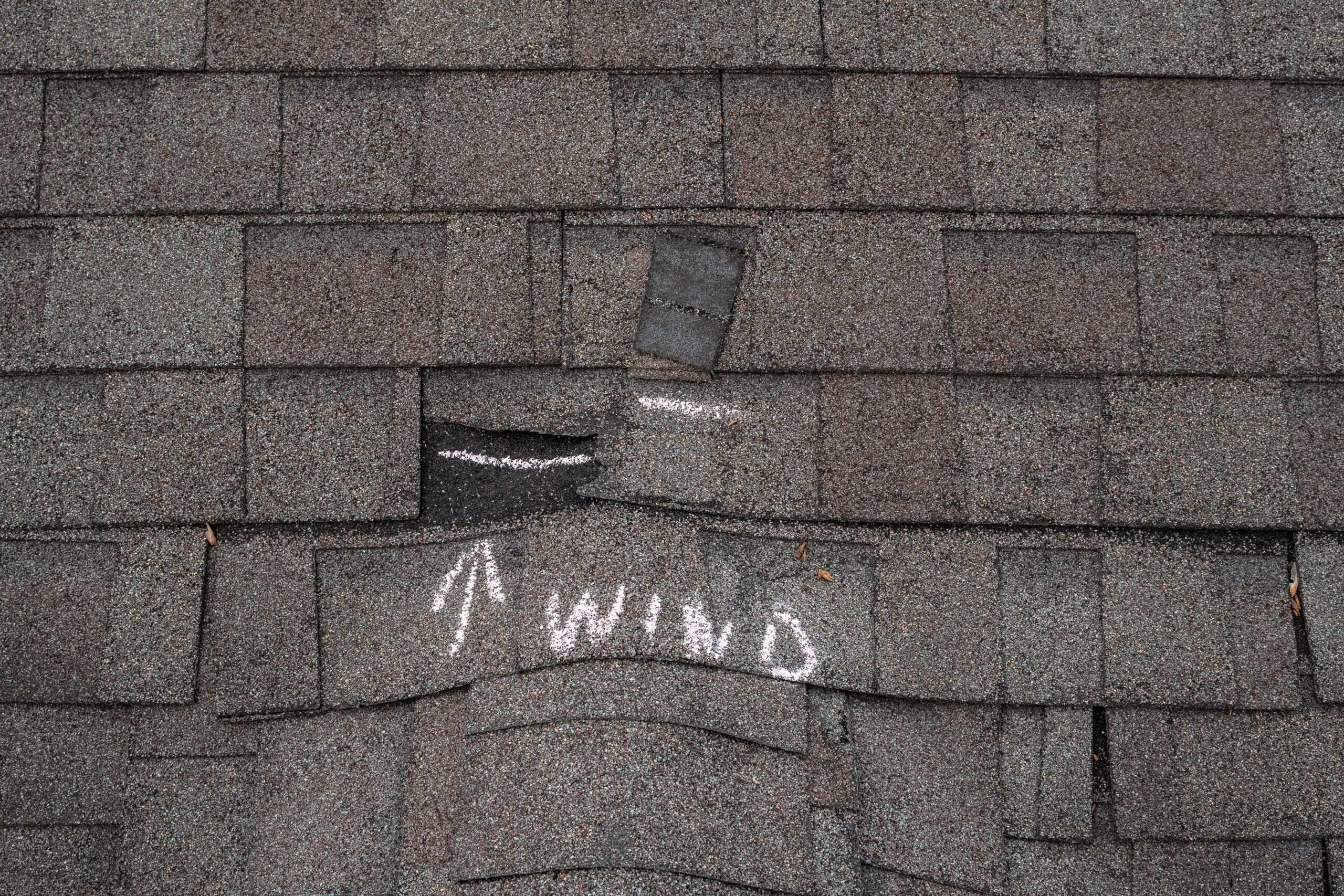
The edges and other pressure points on the roof are most likely to sustain damage from wind. During our inspection we’ll look for curling shingles where the wind took hold and began to peel them. Shingles keep out water, so if they’re loose it will lead to water damage and a quickly deteriorating roof.
Entire Shingles Missing from the Roof
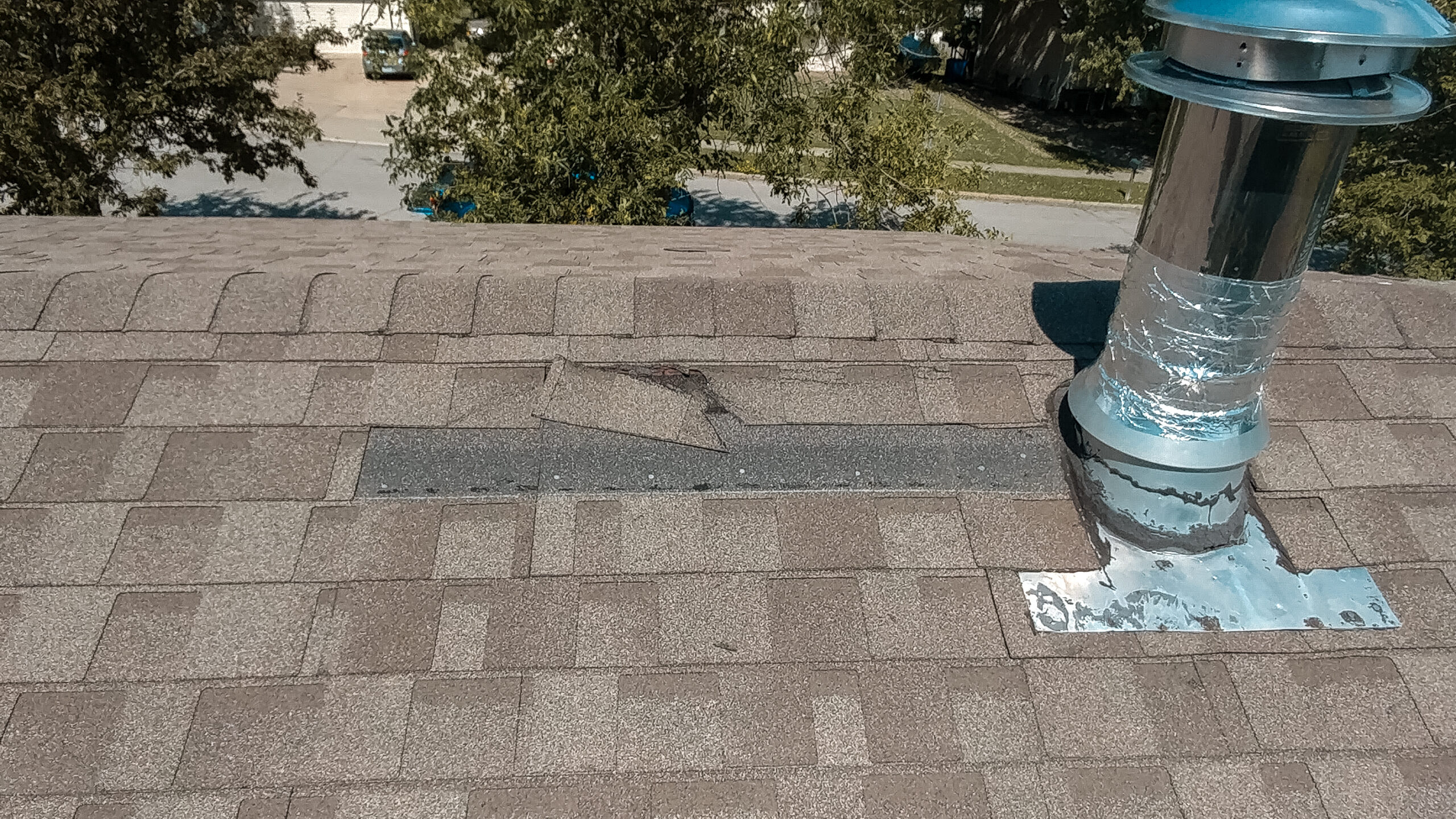
One of the easiest ways to tell that you have a wind-damaged roof is the loss of entire shingles. If you find shingles in your yard or around your house, you’ll want to have a professional come out and look at what else could cause you trouble. Strong winds can completely rip shingles off, leaving your roof vulnerable.
See any of these signs? That’s all we need to hear.
Cracks or Tears in a Flat, Rubber Roof
If you have a flat roof, we’ll look for missing pieces or tears in the material. Wind can lift up the material and rip it away or leave it with bubbles that compromise the integrity of the covering.
Damaged Soffit or Fascia
Like shingles, soffit and fascia keep water away from the roof, reducing the chances of getting a leak. When damaged, soffit and fascia can open your home up to water damage and stray critters sneaking in. Wind can cause cracks, loose or bent areas or even blow off fascia entirely.
Chimneys
Is your chimney looking a little crooked? This should tip you off to a problem. Sometimes we find missing spots of flashing, which breaks the seal around the chimney and lets in water.
Leaks and Indoor Signs of Roof Damage
It might seem counterintuitive to go inside your home to look for roof damage, but the signs might be written on the walls. If you see discoloration, wet spots or peeling paint, there’s a good chance your roof is leaking. We’ve got an entire article focused on what can happen if you ignore storm damage.
Water doesn’t wait. Neither should you.
Free drone inspection · Estimates within 24 hours · No obligation
How to Repair a Wind-Damaged Roof
Roof damage caused by wind can absolutely be repaired. The scope of the repair depends on the damage, ranging from shingle replacement all the way to a full roof replacement. If you notice damage to your roof, schedule a free property evaluation right away, because damage will only worsen the longer your roof and home are exposed.
After we assess your property and use our cutting-edge drones to identify damage, we’ll sit down with you to discuss what we found. Our roof inspections are always free.
Is Wind Damage Covered by Insurance?
If you suspect your roof was damaged by wind or another weather-related event, we recommend calling Superstorm Roofing & Siding first for your free drone roof inspection. Wind damage is commonly covered under homeowners insurance policies — check your policy to find out.
Our storm damage repair team will provide you with a thorough evaluation of the damage, necessary repairs and the cost involved — so you have the documentation you need if you choose to file a claim with your insurer. We provide the detailed documentation and evaluation data homeowners need when working directly with their insurance company, though we are not public adjusters.
Stop Wondering. Start Knowing.
Every day you wait is another day water gets in. We’ll tell you exactly what’s going on up there — no cost, no obligation.
Owens Corning Platinum Preferred · Top 1% in the Nation · Iowa’s First $25,000 Guarantee
Schedule Your Free Wind Damage Inspection
If you’re worried that your roof, soffits or fascia were damaged by high winds, Superstorm Roofing & Siding offers free property and drone evaluations across Des Moines and Central Iowa. Fill out the form below and our team will be in touch — typically within 24 hours.
Rather just talk to someone?
Our team picks up the phone — day, night, weekends. Try us.
Recent Posts
- Class 3 & Class 4 Shingles: The Real Value — and the Fine Print on Insurance Rebates
- What to Do After a Wind or Hail Storm in Iowa (Homeowner Checklist)
- How Much Does a New Roof Cost in Iowa (2026)?
- How Long Does a Roof Last in Iowa? Warning Signs You Need a New Roof
- Understanding Gutter Types and Sizes
- Giving Back To Our Community
- Prepare Your Home And Business For Severe Wind Storms Like A Derecho
- Comprehensive Guide to Roof Financing for Property Owners
- Understanding Your Insurance Claim After a Storm
- Protect Your Roof To Protect Your Home – Roof Maintenance Checklist for Every Season